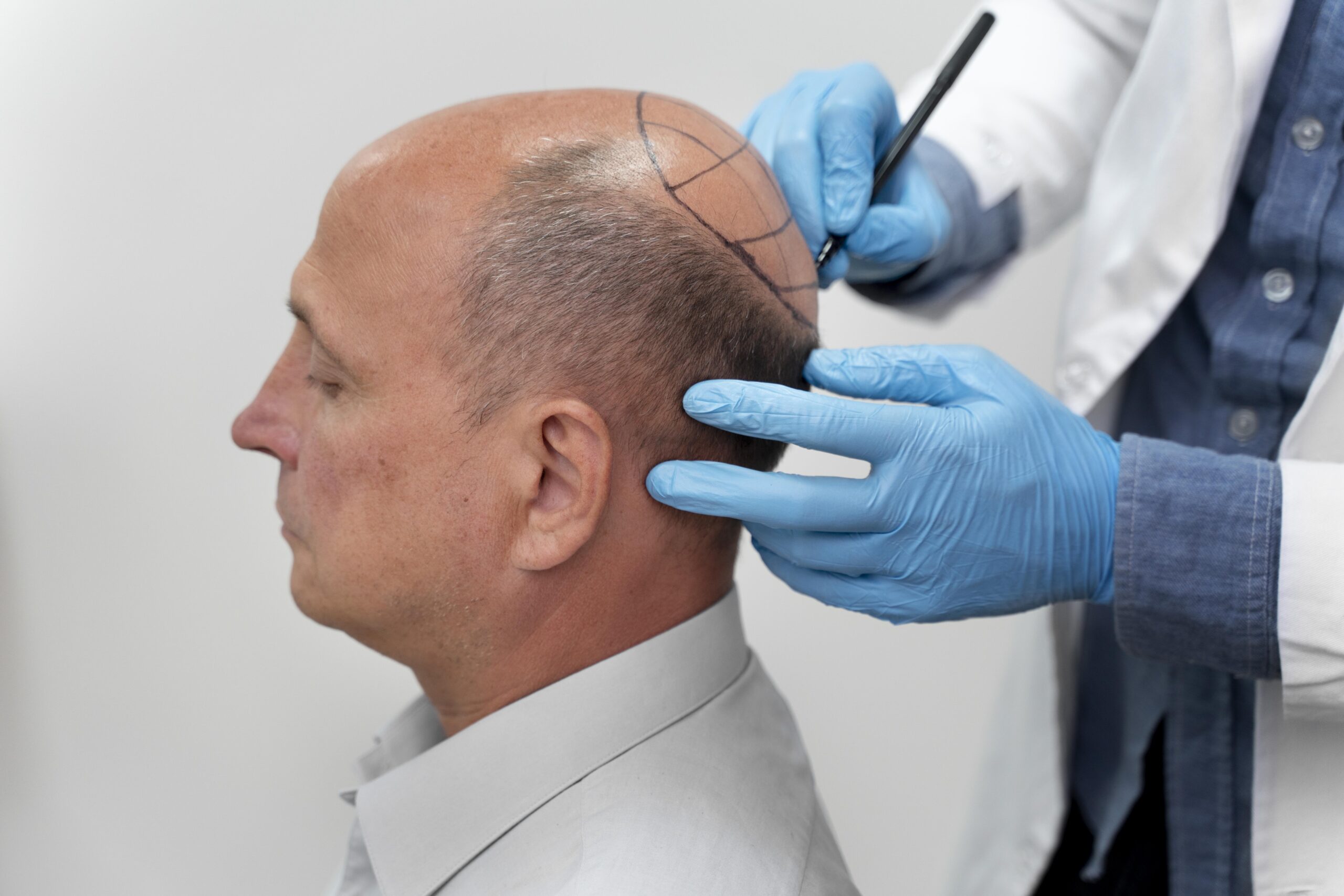
The truth about hair loss
Baldness is often blamed on poor circulation to the scalp, vitamin deficiencies, dandruff, among other things. While these factors as well as many others can affect hair growth, they rarely are the sole cause of hair loss. In the vast majority of cases, hair loss is caused by male (or female) pattern hair loss. Male-pattern or female-pattern baldness represents about 90% of all hair loss cases. This condition is determined mainly by the predestined genetics of the individual. Hair loss occurs when a hormone called DHT ( Dihydrotestosterone) which precipitates hair loss builds up around the hair follicle. When an individuals hair has a genetically determined receptiveness to DHT in a particular pattern ,hair loss occurs at those areas, usually in a progressive fashion. However, most individuals, whether partially bald or not have geneticaly resistant areas of scalp, which can be used as donor hair.
Hair replacement surgery can enhance your appearance and your self-confidence, but the results won’t necessarily match your ideal. Before you decide to have surgery, think carefully about your expectations and discuss them with Dr. Milne. It’s important to understand that all hair replacement techniques use your existing hair. The goal of surgery is to find the most efficient uses for existing hair.
Hair replacement candidates must have healthy hair growth at the back and sides of the head to serve as donor areas. Donor areas are the places on the head from which grafts and flaps are taken. Other factors, such as hair color, texture and waviness or curliness may also affect the cosmetic result. There are a number of techniques used in hair replacement surgery. Sometimes, two or more techniques are used to achieve the best results.
Transplant techniques, such as punch grafts, mini-grafts, micro-grafts, slit grafts, and strip grafts are generally performed on patients who desire a more modest change in hair fullness. Flaps, tissue-expansion and scalp-reduction are procedures that are usually more appropriate for patients who desire a more dramatic change.
When reviewing information about specific plastic surgery procedures, it is important to understand that the circumstances and experience of every individual are unique. If you are considering plastic surgery, please ask your plastic surgeon for further information about the particular procedure and what you can expect.