Skin Cancer
Skin Cancer
Who gets skin cancer ...and why
- Your skin is fair and freckles easily.
- You have light-colored hair and eyes.
- You have a large number of moles, or moles of unusual size or shape.
- You have a family history of skin cancer or a personal history of blistering sunburn.
- You spend a lot of time working or playing outdoors.
- You live closer to the equator, at a higher altitude, or in any place that gets intense, year-round sunshine.
- You received therapeutic radiation treatments for adolescent acne.
- Your skin is fair and freckles easily.
Types of skin cancer
- By far the most common type of skin cancer is basal cell carcinoma . Fortunately, it's also the least dangerous kind—it tends to grow slowly and rarely spreads beyond its original site. Though basal cell carcinoma is seldom life threatening, if left untreated it can grow deep beneath the skin and into the underlying tissue and bone, causing serious damage (particularly if it's located near the eye).
- Squamous cell carcinoma is the next most common kind of skin cancer, frequently appearing on the lips, face, or ears. It sometimes spreads to distant sites, including lymph nodes and internal organs. Squamous cell carcinoma can become life threatening if it's not treated.
- A third form of skin cancer,malignant melanoma, is the least common, but its incidence is increasing rapidly, especially in the Sunbelt states. Malignant melanoma is also the most dangerous type of skin cancer. If discovered early enough, it can be completely cured. If it's not treated quickly, however, malignant melanoma may spread throughout the body and is often deadly.
Other skin growths you should know about
Two other common types of skin growths are moles and keratoses.
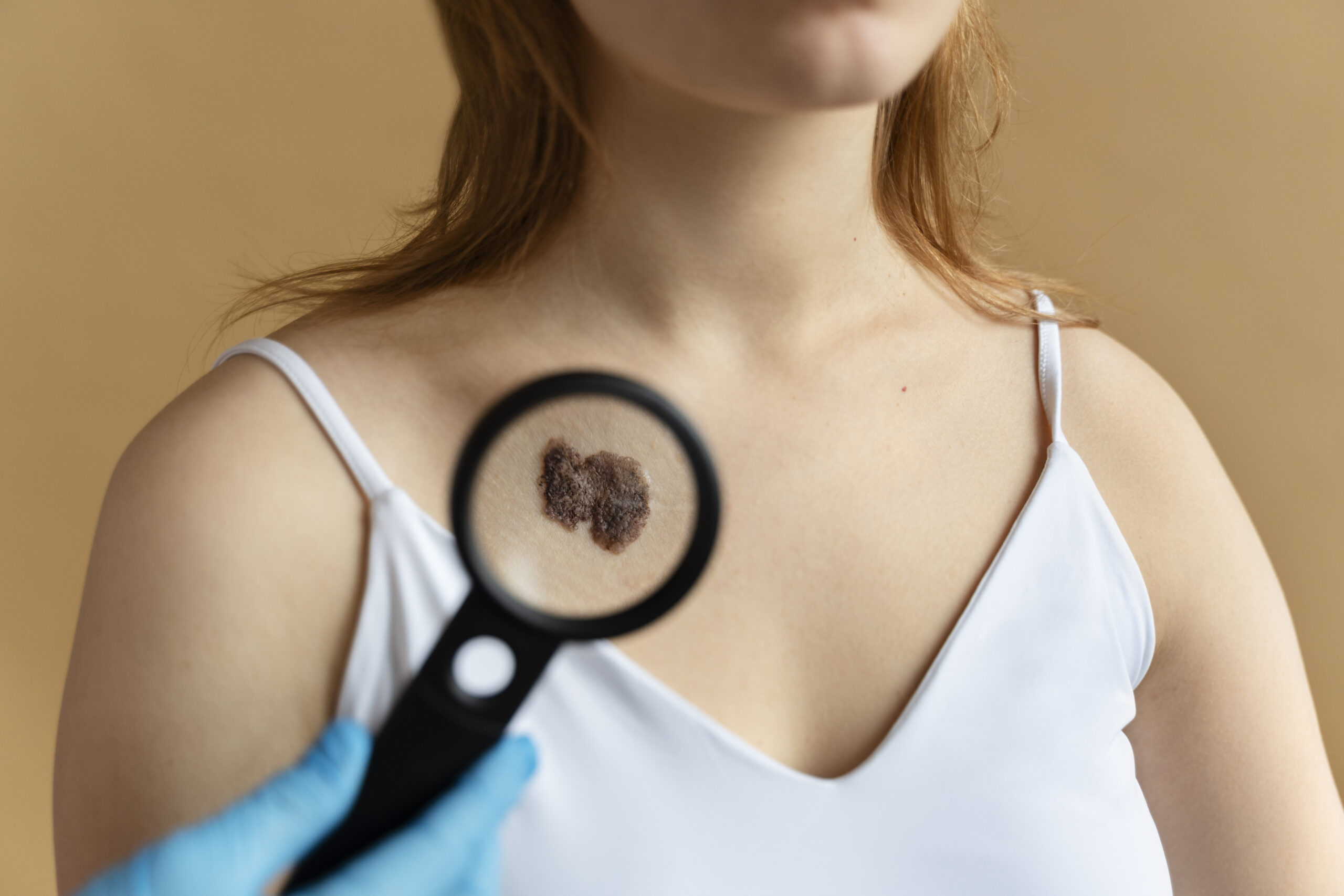
- Moles are clusters of heavily pigmented skin cells, either flat or raised above the skin surface. While most pose no danger, some—particularly large moles present at birth—or those with mottled colors and poorly defined borders—may develop into malignant melanoma. Moles are frequently removed for cosmetic reasons, or because they're constantly irritated by clothing or jewelry (which can sometimes cause pre-cancerous changes).
- Solar or actinic keratoses are rough, red or brown, scaly patches on the skin. They are usually found on areas exposed to the sun, and sometimes develop into squamous cell cancer.
Recognizing skin cancer
- Asymmetry —a growth with unmatched halves
- Border irregularity —ragged or blurred edges
- Color—a mottled appearance, with shades of tan, brown, and black, sometimes mixed with red, white, or blue
- Diameter—a growth more than 6 millimeters across (about the size of a pencil eraser), or any unusual increase in s
If all these variables sound confusing, the most important thing to remember is this: Get to know your skin and examine it regularly, from the top of your head to the soles of your feet. (Don’t forget your back.) If you notice any unusual changes on any part of your body, have a doctor check it out.
Diagnosis and treatment
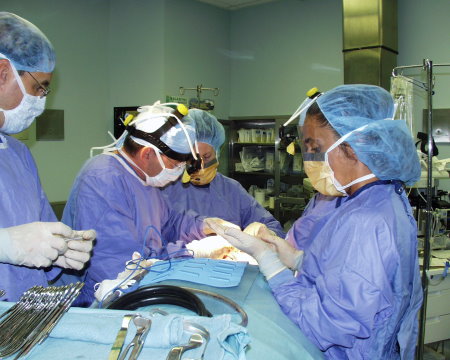
Most skin cancers are removed surgically, by Dr. Milne in the least invasive way possible. In most cases, the procedure can be done quickly and easily, in our office, using local anesthesia or a light anesthesia if necessary. The procedure may be a simple excision, which usually leaves a thin, barely visible scar. Or curettage and desiccation may be performed. In this procedure the cancer is scraped out with an electric current to control bleeding and kill any remaining cancer cells. This leaves a slightly larger, white scar. In either case, the risks accompanying surgery are low.