Facial plastic surgery

Skin cancer is the most common form of cancer in the United States. More than 500,000 new cases are reported each year—and the incidence is rising faster than any other type of cancer. While skin cancers can be found on any part of the body, about 80 percent appear on the face, head, or neck, where they can be disfiguring as well as dangerous.

Facelift

Facelift surgery, or a rhytidectomy, is designed to restore a more youthful appearance by removing major wrinkles and sagging skin. It involves tightening of the facial and neck muscles as well as the removal of any excess skin.
The skin begins to wrinkle and sag as a result of age, sun exposure and genetics. Children and young adults have smooth, round faces due to evenly distributed fatty tissues in facial contours. Over time, the skin sags and folds are the chin, jawline and neck become prominent. Not only does a facelift improve facial appearance but also has a dramatic effect on the neck, enhancing its contour and profile.
A facelift can make a patient look 5 to 10 years younger. Dramatic as the end results are, this is not a simple procedure. It requires a week to 10 days of recovery.
Before Surgery
We will evaluate your medical history in order to determine your overall health.
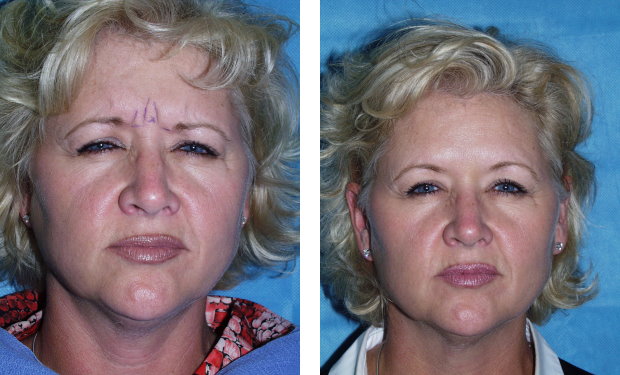
Dr. Milne will discuss with you how your face can look and what you can expect from surgery. Our objective is to create a natural appearance that is pleasing to you. Before and After photographs will reveal what the surgery has accomplished.
Preoperative Instructions: Avoid drugs that contain aspirin several weeks prior to surgery to minimize excess bleeding. You may be required to take antibiotics to prevent infection. You may be instructed to shampoo your hair the night before surgery. A small amount of hair may be shaved around your ears and temples.

The Procedure

Today’s modern facelifts are not all the same. Generally, the facelift can address the neck alone (neck lift or platysmaplasty), involve a limited mid-facelift in a minimal incision approach ( mini-lift or s-lift ) or may include a full size incision and lift (standard facelift). A facelift is frequently performed in conjunction with blepharoplasty (eyelid surgery), forehead lift, chin augmentation, and/or liposuction, to create an overall rejuvenation of the face. The procedure can be repeated as gravity continues its effects after the first surgery.
Facelifts are performed in outpatient surgical centers or in an accredited physician’s office. Local anesthesia with intravenous sedation is most commonly used, with premedication to help you relax. General anesthesia is generally not required but can be used if desired.
The surgeon will make incisions inside the hairline at the temple, in front of the ear, then around the earlobe and behind the ear, ending at the scalp area. Excess skin is removed and sagging muscles and connective tissues are tightened. In some cases, fatty deposits are removed from beneath the chin and neck. Incisions are closed with small sutures.
The procedure may take up to 5 hours depending on whether any other procedures are performed at the same time.

Post Operative Care

It is necessary to have someone drive you home and stay with you for the first 24 hours. Initially you will have a large dressing wrapped around your head. You may have surgical drains attached to bulbs hanging at your neck. These will be removed in approximately 24 hours. Stitches around the ears will be loosened or removed in a few days. The scalp sutures will be removed in 7-10 days.
To minimize scarring, the doctor may remove the sutures in stages. Scarring fades quickly. Swelling and discoloration decrease within two weeks. Tightness in your face will be present for several weeks and there may be slight changes in your hair pattern around the incision.
We recommend that you avoid the sun for several weeks after surgery.
Complications following facelift are rare. These include bleeding, infection, loss of skin behind the ears, facial nerve injury, discoloration of the skin, numbness, asymmetry and scarring. Infection is rare due to the large blood supply to the face. As mentioned, the risk of bleeding is greater if you take aspirin or blood thinners within 2 weeks of the surgery. The risk of wound complications increases in diabetics, persons with a history of radiation, autoimmune and collagen disease as well as in smokers.
By following pre- and post-operative instructions, you will minimize potential problems.

Nasal Surgery / Rhinoplasty

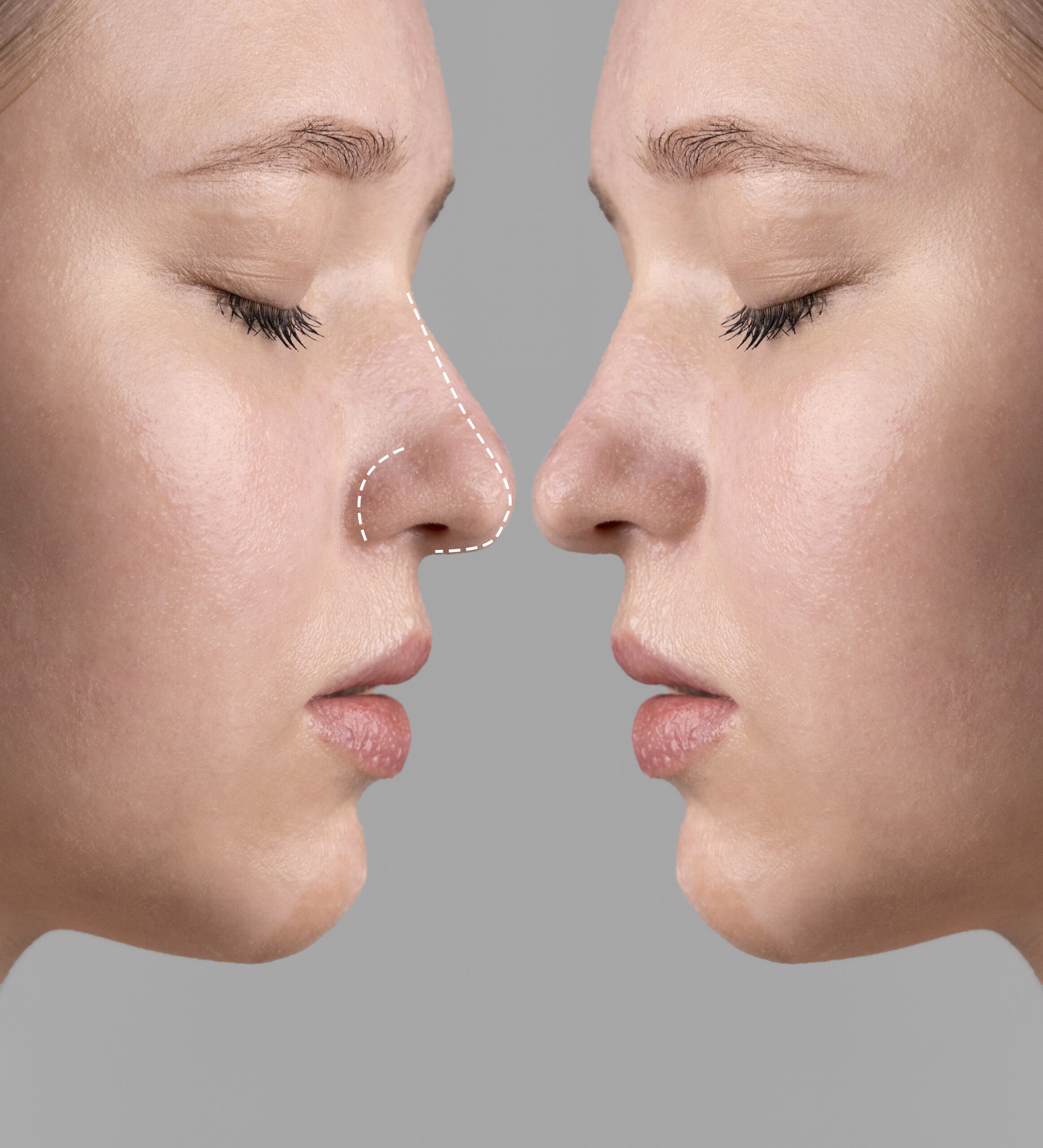
Dr. Milne performs rhinoplasty in order to reshape the nose. Appearance can be improved for those people who are dissatisfied with the shape and size of the nose. Nasal reconstruction was one of the first cosmetic procedures ever developed and is among those most frequently performed today. Rhinoplasty is a surgical procedure in which deformities of the nose are corrected by removing, rearranging or reshaping bone or cartilage.
Reasons for Surgery

Reasons include reducing the size of the nose, removal of bumps as well as improving the angle of a nose. Conditions may be natural or due to external trauma to the face. This operation will also help patients who have difficulty breathing. The operation can be performed on all age groups, including teens and the elderly.

Before Surgery

A medical history along with a careful examination is conducted in order to evaluate your general health. We will discuss with you the way your nose can look in relation to your other facial features. Digital photographs and computer imaging allow Dr. Milne to evaluate the appropriate procedure to achieve the desired results. Pre-operative instructions may include the elimination of certain drugs that contain aspirin in order to minimize the possibility of excess bleeding. Antibiotics may be prescribed before surgery to prevent infection.
Method of Surgery

Surgery is usually performed under IV sedation, which is both extremely comfortable and results in less swelling and bruising than general anesthesia. In most cases involving a reduction in shape or size of the nose, angle or removal of a hump, the skin of the nose is separated from the underlying skeleton of bone and cartilage. The bone and cartilage are then reshaped and the skin re-draped over the surface. Patients who have a deviated septum may benefit by correction of this problem. The incisions are placed inside the nose, unless the surgeon uses an open approach, in which case the incisions are made across the tissue between the nostrils. In cases where the nostrils flare, the surgeon may make an incision at the junction between the nose and the skin of the upper lip to narrow the flared appearance. It is not unusual to combine rhinoplasty with chin augmentation to improve the profile.

Post-Operative Information

The recovery takes one to two weeks. Most people resume their normal activities within a week or two. Following surgery, a lightweight splint is applied to maintain the new shape of the nose. The splint is removed within a week. Nasal splints may be inserted at the time of surgery to protect the septum. These are removed within a week. There is always some stuffiness of the nose, especially when work has been done on the nasal septum.
Pain is minimal and is controlled with medications. Bruising occurs around the eyes, but begins to fade within a few days. Discoloration usually disappears in two weeks.

BOTOX® Cosmetic

Botox treatment is a revolutionary approach to reversing the affects facial wrinkles. Crow’s feet, worry lines and laugh lines can all be a thing of the past. These are referred to as dynamic wrinkle lines and all are treatable with this procedure. Cosmetic denervation is the process of injecting botox into the tiny facial muscles that create the wrinkles.
Before Surgery
To better understand your overall health, we will evaluate your medical history prior to surgery. In addition, a complete examination of your eyes is made in order to decide the most effective injection sites. All issues and concerns will be discussed.
The areas that will be treated are marked and digital photographs are taken in order to determine the amount of improvement after surgery.

The Botox Procedure

Botox injections are performed without anesthesia because it is virtually painless. Only a very small sting is felt when the injections are made. The effects are not permanent and may need to be repeated two to three times per year to retain the effects. Research has suggested, however, that long term use of the injections leads to a longer duration of each treatment’s effect. Patients over the age of 65 may not experience as dramatic of results. Botox is only useful in treating expression lines and cannot be used to repair sagging skin caused by aging.

Post-Operative Information

After the operation patients may experience slight bruising around the area that quickly fades. Normal activities can be performed immediately. Possible side effects are temporary weakness of nearby muscles or in rare cases an eyelid may droop. Botox is completely reversible so any side effect is only a temporary condition. The doctor will explain all risks associated at the time of your consultation.

Brow & Forehead Lift

Dr. Milne performs Brow and Forehead Lifts to raise eyebrows and reduce ridges and furrows on the forehead, thus creating a smoother, more youthful appearance. This procedure can be performed in conjunction with other surgeries. Forehead and brow lifts can be further divided into a full (traditional) forehead lift, temporal or limited incision brow lift, endoscopic brow lift, direct brow lift and transblepharoplasty brow lift. Dr. Milne can discuss the pros of cons of each and come to a mutual decision about which one is right for you.

In the  traditional brow lift, an incision is generally made across the top of the head from the front of one ear to the front of the other ear. The forehead and brows are elevated and excess skin is removed. The flap is then sutured. The temporal brow lift allows for a much smaller incision, which requires very little recovery time and excellent results. Direct brow lifting is helpful for middle age to older patients, particularly male patient’s. The endoscopic brow lift, transblepharoplasty lift and brow pexy procedures require very small incisions. However, results are not as dramatic and they are used most often in younger patient’s with  the need of only small correction. However, the small incisions in the scalp accelerate the healing process.

Method of Surgery

Surgery is usually performed under IV sedation, which is both extremely comfortable and results in less swelling and bruising than general anesthesia. In most cases involving a reduction in shape or size of the nose, angle or removal of a hump, the skin of the nose is separated from the underlying skeleton of bone and cartilage. The bone and cartilage are then reshaped and the skin re-draped over the surface. Patients who have a deviated septum may benefit by correction of this problem. The incisions are placed inside the nose, unless the surgeon uses an open approach, in which case the incisions are made across the tissue between the nostrils. In cases where the nostrils flare, the surgeon may make an incision at the junction between the nose and the skin of the upper lip to narrow the flared appearance. It is not unusual to combine rhinoplasty with chin augmentation to improve the profile.

Post-Operative Information

The recovery takes one to two weeks. Most people resume their normal activities within a week or two. Following surgery, a lightweight splint is applied to maintain the new shape of the nose. The splint is removed within a week. Nasal splints may be inserted at the time of surgery to protect the septum. These are removed within a week. There is always some stuffiness of the nose, especially when work has been done on the nasal septum.
Pain is minimal and is controlled with medications. Bruising occurs around the eyes, but begins to fade within a few days. Discoloration usually disappears in two weeks.

Common Questions About Facial plastic surgery

Healthy individuals who want to improve facial appearance, reduce signs of aging, or correct facial concerns are usually good candidates. A consultation helps determine the best treatment plan.
We offer a wide range of procedures including rhinoplasty, facelift, eyelid surgery (blepharoplasty), brow lift, chin augmentation, and non-surgical facial treatments.
Yes, facial plastic surgery is safe when performed by an experienced and qualified surgeon using modern techniques and advanced medical equipment.


Recovery time depends on the procedure. Most patients in Austin can return to normal activities within 1–2 weeks, while full healing may take several weeks.

The cost varies depending on the procedure, complexity, and treatment plan. A consultation is the best way to get an accurate price estimate.
Yes, non-surgical options like Botox, dermal fillers, and skin rejuvenation treatments are available for patients who want subtle improvements without surgery.
Results can last many years depending on the procedure, lifestyle, and skincare routine. Proper care helps maintain long-term results.